Industry Solution Last edited: January 30,2026 Author: Brothersbox Views: 16

Card Deck Material Comparison: Blue Core vs. Black Core

Introduction

In the world of custom card manufacturing, the "core" refers to the center layer of the cardstock. When you tear a professional playing card, you'll see a thin sliver of colored paper sandwiched between two white layers. This isn't just for show—it’s the secret to opacity and snap. At Brothersbox, we frequently help creators decide between the two industry standards: Blue Core and Black Core.

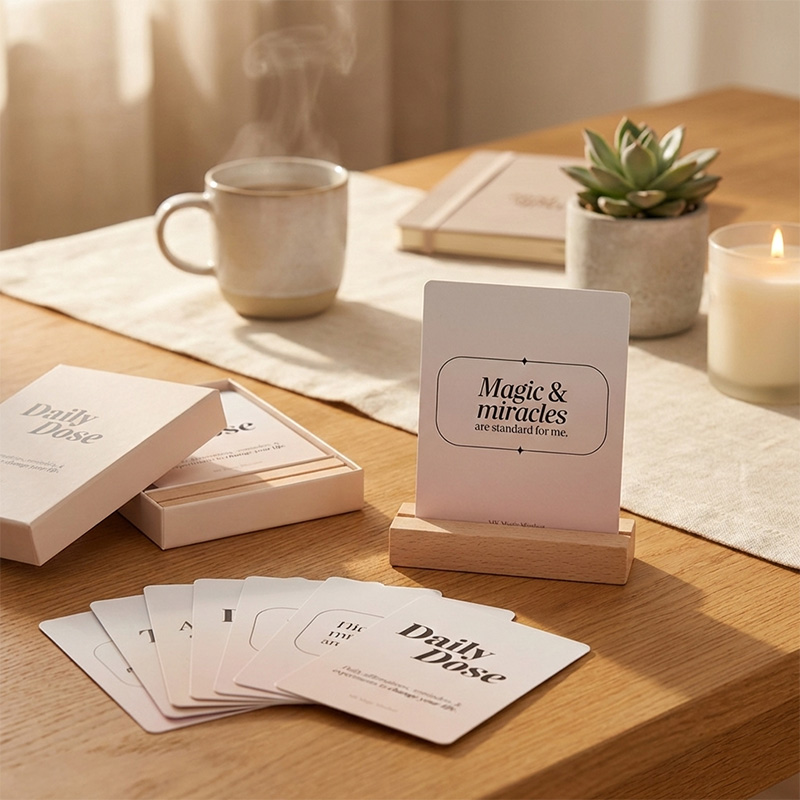
Elegant Positive Affirmation Cards for Personal Growth

Understanding Card Deck Materials

Cardstock is a composite material. The colored core (the "glue" layer) prevents light from shining through the card, ensuring players can't cheat by seeing their opponent's hand. While both cores serve this purpose, they cater to different markets and price points.

What is Blue Core?

Blue core paper is a high-quality cardstock featuring a blue-tinted glue layer. It is the most popular choice for retail board games and promotional decks because it offers a professional feel without the premium price tag of casino-grade materials.

What is Black Core?

Black core is the gold standard for professional gaming. It features a black glue layer that provides 100% opacity. This material is denser, offers superior "snap," and is the preferred choice for high-stakes Trading Card Games (TCGs) and casinos.

Advantages of Blue Core Playing Cards

Durability and Flexibility

Blue core cards are remarkably resilient. They are designed to withstand the "shuffling fatigue" of casual gaming, maintaining their shape even after hundreds of rounds.

Print Quality

The surface of blue core stock is optimized for vibrant ink absorption. This makes it ideal for party card games or kids card games that rely on bright, engaging illustrations.

Cost-Effectiveness

For creators on a budget, blue core is the "sweet spot". It provides a significantly better experience than standard white core (which lacks opacity) while keeping production costs manageable for large-scale distribution.

Advantages of Black Core Playing Cards

Opacity and Light Blocking

The primary reason to choose black core is its total light-blocking capability. Even under direct sunlight or intense overhead tournament lights, the cards remain completely opaque.

Enhanced Playability

Black core cards have a distinct "memory". When bent, they snap back to their original flat shape instantly. This tactile feedback is essential for the smooth handling and shuffling required in competitive play.

Ideal for Trading Card Games

If you are designing a Trading Card Game (TCG), black core is almost mandatory. Players expect a specific weight and stiffness that only black core can provide.

Comparison: Family and Educational Games

Family Card Games

When choosing for family card games, the decision often depends on the "vibes" of the game:

Blue Core Favorites: Games like Uno or standard memory card games often use blue core for its balance of quality and cost.

Black Core Favorites: Premium conversation card games or high-end collector editions of family classics often opt for black core to convey luxury.

Educational Card Games: Material Matters

In educational card games, durability is king. Since these cards are often handled by children, the material must resist creasing.

Which Material Enhances Learning? While both work, blue core is often preferred for classroom sets due to cost. However, black core can enhance learning by making the game feel "special," increasing student engagement.

Conclusion

Choosing between blue and black core depends on your audience and budget. Blue core offers fantastic value for kids and party games, while black core is the essential choice for TCGs and professional decks.

CONTACT US

exclamation Please enter your name
exclamation Please enter company name
exclamation Please enter a valid email
exclamation Please enter Whatsapp
exclamation Please enter your project details